
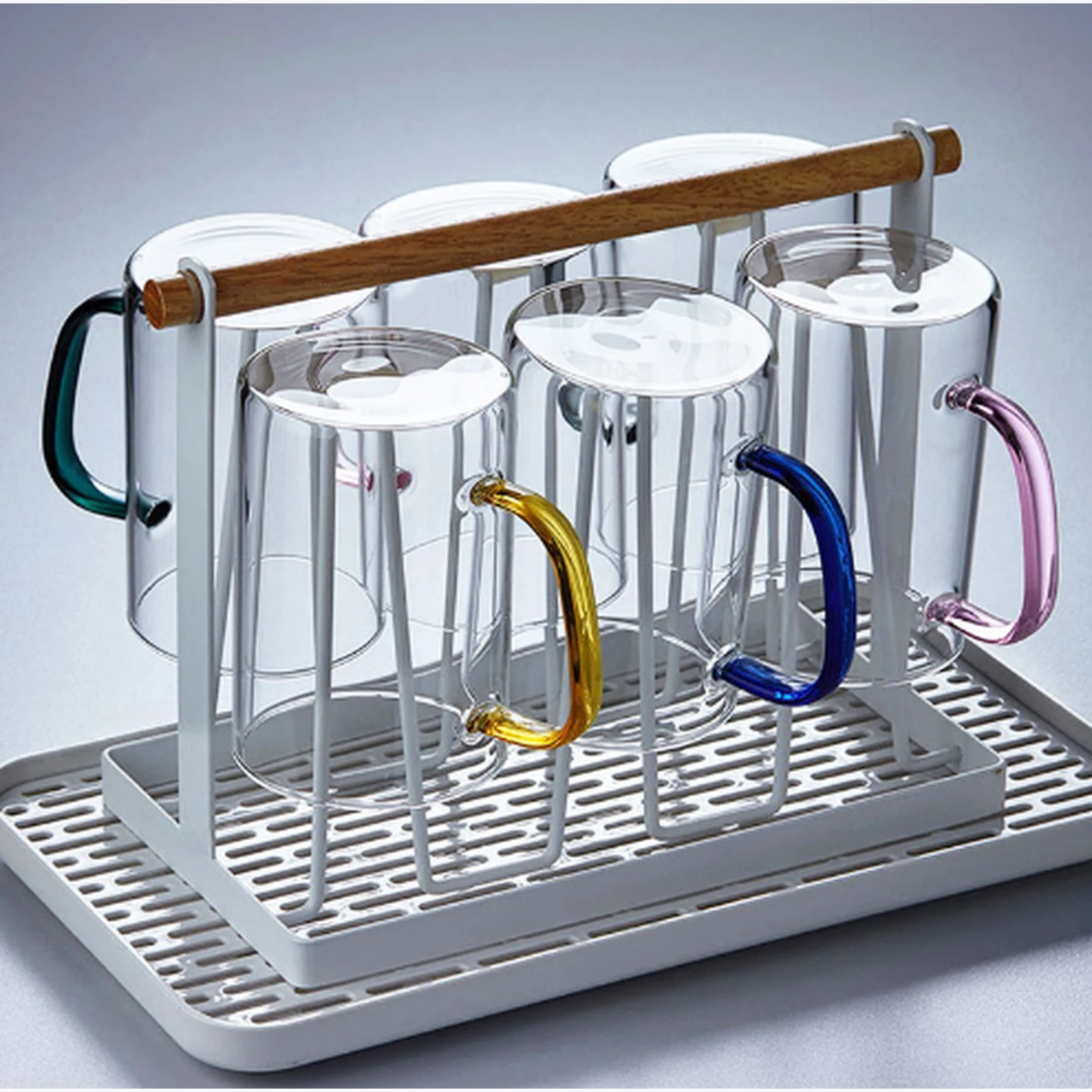
An overseas buyer often begins a custom glass cup inquiry with one picture and one sentence: “Can you make something like this with our logo?”
We can usually begin from that information, but we cannot responsibly finish a quotation from it. A cup that looks simple in a photo still contains decisions about capacity, glass material, handle, rim, decoration, accessories, packing and transport. If those decisions are left open, two suppliers may quote two completely different finished products under the same name.
Our work as a custom glass cups supplier is to turn the buyer’s idea into a specification that can be sampled, inspected, packed and repeated. We do not start by adding every possible customization. We first find the shortest practical route to the product the buyer needs.
We first ask what the cup must do
The same glass cup can be bought for very different reasons. A café may want a 300ml cup that customers can also buy as merchandise. A homeware importer may want six colors in one retail box. An online seller may need an individual carton that can survive parcel delivery. A promotion company may care most about a clear logo area and a fixed event date.
Those uses change our recommendation.
For a café, we ask about the drink size, daily handling, washing routine, logo position and replacement orders. For a retail set, we ask which colors belong together, how the cups sit in the insert and what information must appear on the box. For e-commerce, we review the retail box together with outer parcel protection. We do not treat packaging as a separate decision made after the glass is finished.
The first useful inquiry therefore includes the intended use, target capacity, expected quantity, destination and sales channel. A reference picture helps us understand the appearance, but the business situation tells us what the product must accomplish.
We compare the idea with an existing model before discussing a new mold
Our DB0003 colored-handle glass cup is a useful example. It is an existing 300ml borosilicate glass model. The body remains clear while the handle can carry the main color identity. Current customization directions include handle color, logo and set combination. The recorded planning baseline starts from 2,000 pieces, and a typical sample review takes 7–15 days after the key details are confirmed.
Review the DB0003 300ml colored-handle glass cup.
This does not mean every custom cup must use DB0003. It shows how we reduce uncertainty. We put a real cup on the table, compare its capacity and proportions with the buyer’s reference, and identify what can stay standard. If the body is suitable, the project may need only a handle color, logo and packaging sample. That is a shorter route than creating an entirely new shape.
A new mold becomes relevant when the body profile, capacity, rim, base or handle structure must be unique and that difference has commercial value. It adds drawing review, tooling, trials and approvals. For a first order, we normally explain the existing-model route and the new-development route separately so the buyer can compare scope, not just unit price.
Customization is a list of controlled decisions
“Custom” should not mean that every detail remains open until production. We break the cup into decisions that can be approved one by one.
The glass body comes first: material, usable capacity, height, diameter, rim and intended drink. Then we confirm visible customization: handle color, body color if applicable, logo artwork, logo size, position and process. Accessories such as a lid, straw or sleeve are separate components with their own dimensions and packing risks. Finally, we define the selling unit: one cup, a pair, a mixed-color set or another combination.
For a colored-handle project, a Pantone reference alone is not enough. We also need the quantity per color. A total order of 2,000 pieces split into two colors is a different production plan from the same total split into eight colors. Each logo version, color and box variation can create another SKU. That is why the final MOQ is connected to the assortment, not only to the cup body.
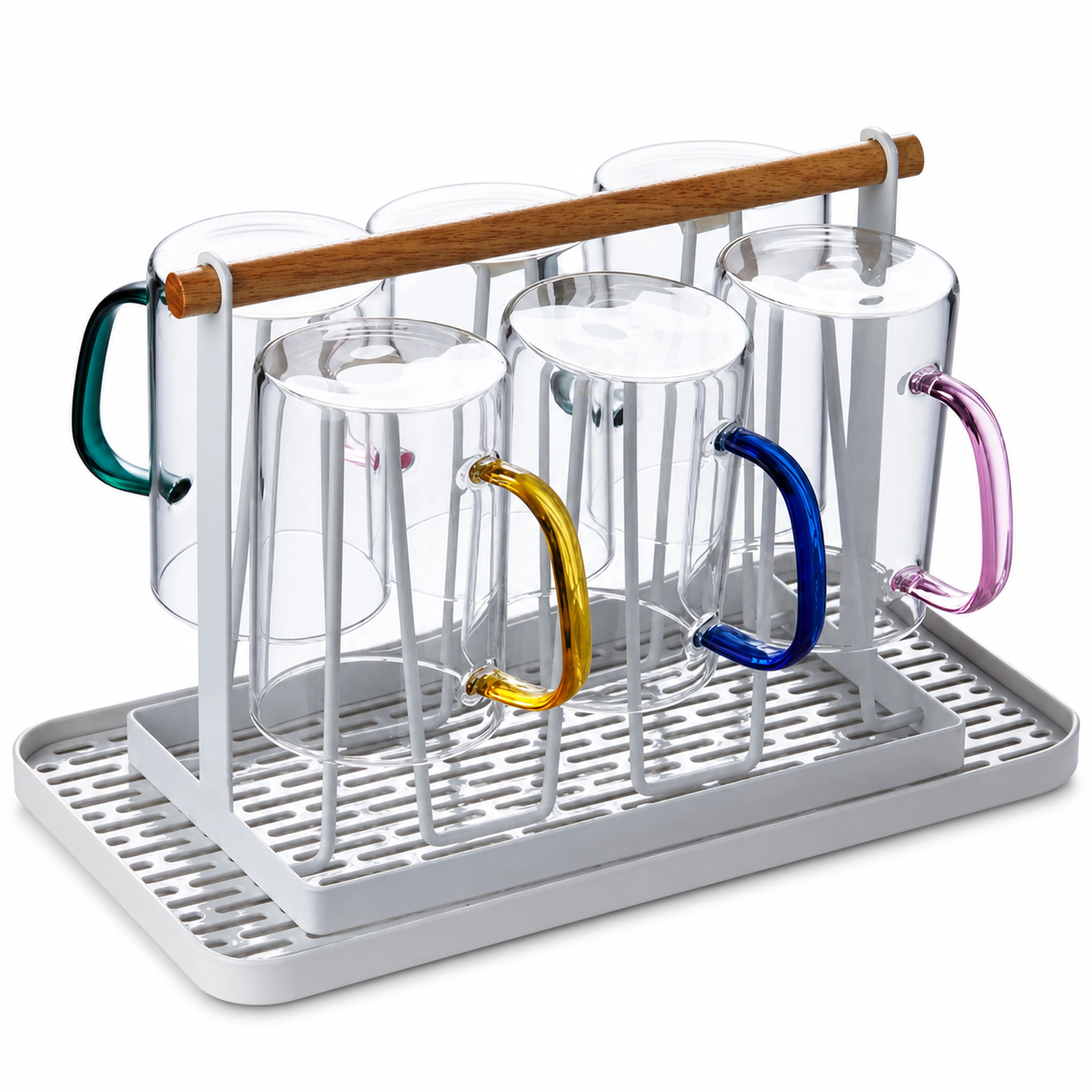
Real product image of the current DB0003 model. It is a starting SKU, not a promise that every requested variation is already stocked.
The sample should answer the risky questions
Buyers sometimes ask for a sample before deciding what they need the sample to prove. We prefer to define that purpose first.
A current plain sample can confirm size, hand feel, capacity and basic shape. A decorated sample is needed when logo scale, position or color must be approved. If the retail box is important to the sale, a box proof or packaging sample may be more valuable than a second plain cup. If the set contains a lid, straw or insert, those parts should be reviewed together because fit cannot be approved separately from the finished product.
For our current catalog projects, 7–15 days is a common sample planning range after the model, logo, pack direction and destination details are clear. A new mold, special coating, new accessory or complex box can require a different schedule. We confirm the sample scope before confirming the date.
The buyer should record the approved sample version. Bulk production should follow a specific cup, decoration file and packaging structure, not a chain of informal chat messages.
MOQ is a production result, not a sales slogan
Our general planning baseline for many OEM glassware projects starts from 2,000 pieces. The final minimum depends on the model and on how the order is divided.
An existing clear cup with one logo and one export-pack format is usually easier to organize than a project with four capacities, six colors, two logo versions and individual gift boxes. Decoration setup, accessory purchasing and printed packaging may each have a practical minimum. Even when the glass quantity is workable, a small quantity of custom printed boxes can affect the unit cost.
When a buyer needs a trial order, we look for ways to reduce unnecessary variation. We may suggest one existing body, fewer colors, one logo and a standard box structure. This is not a promise that every request can be produced below the published planning baseline. It is a way to use the first order to validate demand without creating too many slow-moving SKUs.
Read how we evaluate glassware MOQ.
Packaging has to protect the weakest part of the cup
The weakest point is not always the glass body. A handle can touch the carton wall. A straw can move and scratch another component. Two cups in a set can knock against each other. A tall cup can shift inside an oversized box.
For DB0003, our recorded packing directions include a custom single box, a six-piece set box and an export carton. The correct choice depends on how the cup will be sold. A wholesale café program may use practical dividers and a strong outer carton. A six-piece homeware set needs an insert that controls each cup and keeps the handles separated. An e-commerce item may need additional protection beyond the shelf-ready color box.
We check the approved product dimensions before finalizing the insert and carton. We also confirm piece count, barcode, carton marks, destination and any pallet requirement. Packaging affects unit cost, carton size, loading efficiency and breakage risk, so it belongs in the RFQ from the beginning.
See how we plan retail and export packaging.
What we inspect before shipment
Our cup inspection is based on the approved specification. Typical checkpoints include the rim and mouth finish, capacity and weight consistency, handle or accessory fit, logo position and adhesion, piece count and carton protection.
For a colored handle, we also review the joining area and consistency against the approved color reference. For a set, we check that the correct color assortment and quantity enter each box. For a logo project, we compare position and appearance with the approved sample rather than accepting a vague instruction such as “centered.”
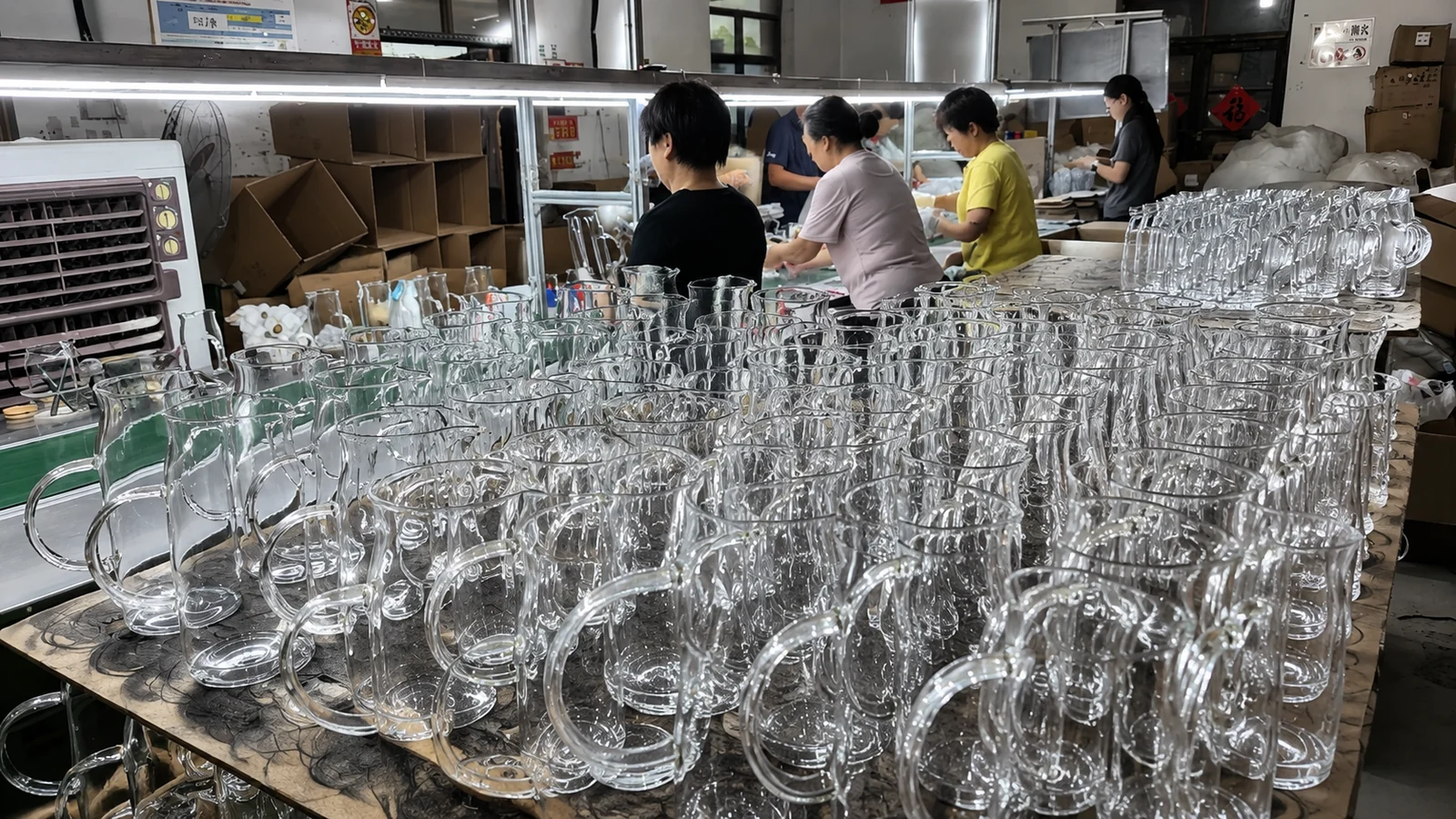
Real Guangyi Glass supply-side inspection imagery. The products shown illustrate the QC environment and are not presented as a named customer’s cup order.
If an issue appears during production, it is easier to make a decision when the standard is documented. We can separate acceptable variation from a real defect, identify the affected quantity and agree on corrective action before packing. A clear approval trail protects both sides.
Review our glassware quality-control process.
What to send for a useful custom glass cup quote
A complete technical drawing is helpful but not required for the first message. Send what you already know:
- A product link, SKU or reference image
- Target capacity and intended drink
- Expected total quantity and quantity per color or size
- Logo file, approximate size and preferred position
- Required accessories such as lid, straw or sleeve
- Single, set, retail, gift or e-commerce packing direction
- Destination country or warehouse
- Required delivery or launch date
With these details, we can tell you whether an existing model is suitable, what still needs confirmation, what the sample should include and which assumptions will appear in the quotation.
Buyer FAQ
What is the MOQ for custom glass cups?
Our common planning baseline starts from 2,000 pieces for many OEM projects. The final MOQ depends on the cup model, quantity per capacity or color, logo versions, accessories and packaging SKUs. We confirm the actual minimum after reviewing the complete assortment.
Can you match a Pantone color on a glass cup handle?
We can review a Pantone reference for applicable colored-handle projects. The sample and approved color reference control production. Buyers should also provide the quantity per color because a large number of small color batches changes the order plan.
Do we need a new mold for a custom cup?
Not always. We first compare the idea with current models. A new mold is considered when an existing body cannot meet the required shape, capacity or function and the unique design justifies added tooling and approval work.
How long does a glass cup sample take?
For current catalog projects, 7–15 days is a typical planning range after the model, logo, accessories and packaging scope are confirmed. New tooling or unusual decoration can require more time.
Can you make individual retail boxes or gift sets?
Yes. We can review custom single boxes, set boxes, gift boxes, inserts, dividers, labels and export cartons. The final box should be sized around the approved cup and accessories.
What should we check during sample approval?
Check capacity, dimensions, rim feel, handle, logo position and appearance, accessory fit, set contents and packaging. Record the approved version so bulk production has one clear reference.
Start with one real cup project
Guangyi Glass supplies glass cups, pitchers, teapots, jars and related packaging for overseas B2B buyers. We prefer a specific starting point to a generic price list.
Send us the closest product, target capacity, quantity, logo, packing and destination. We will review the current-model route first, identify the decisions that affect MOQ and sample timing, and prepare a quotation whose scope you can understand.
Send your custom glass cup RFQ or browse our current glass cup models.