
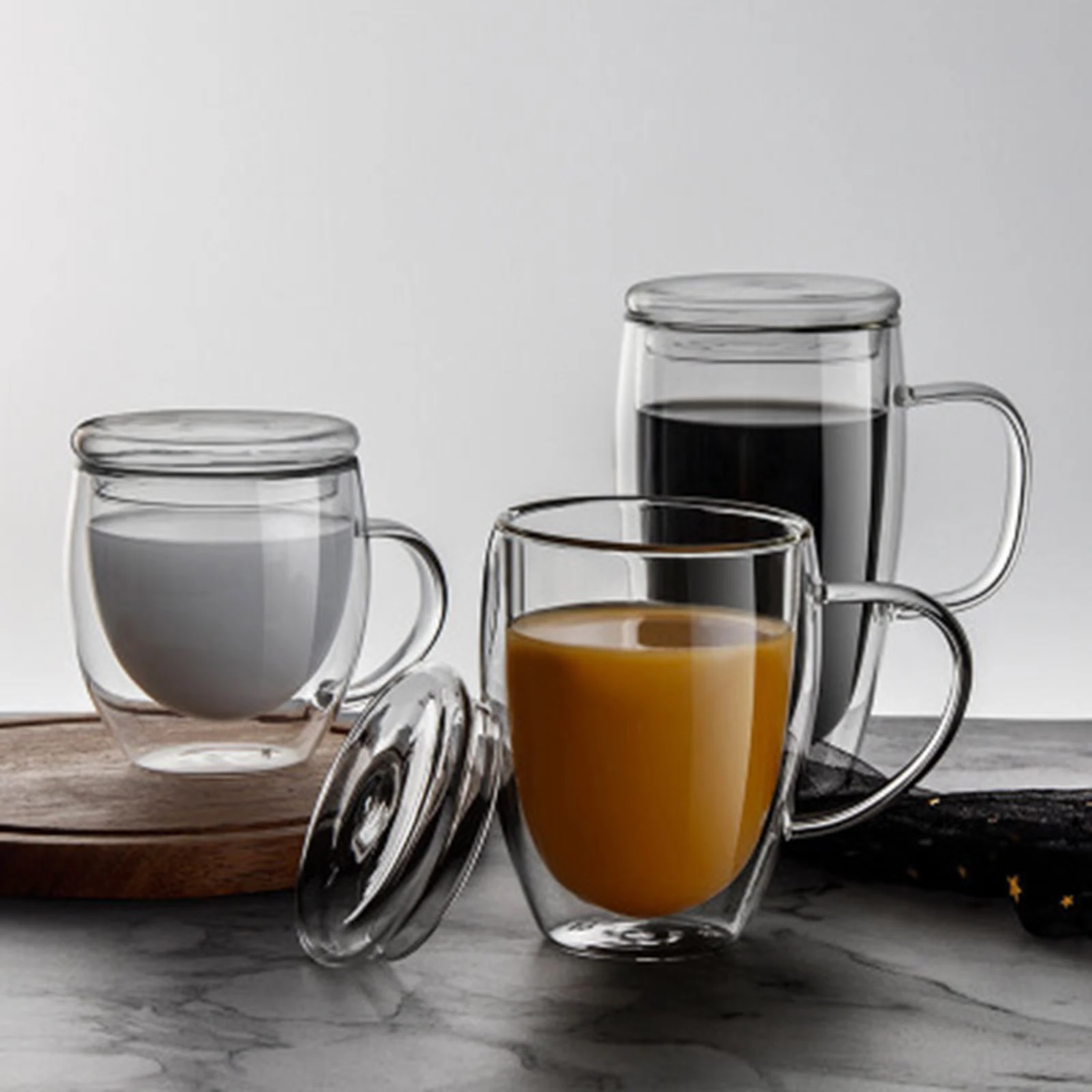
Double-wall glass cups attract coffee, tea and homeware buyers because the drink appears suspended inside a light, transparent form. That visual effect is also the reason the product needs a more specific review than an ordinary single-wall tumbler.
The buyer is not choosing only a capacity and logo. The inner wall, outer wall, rim connection and sealed base form one product. The cup needs the right visual balance, hand feel and protection. If several capacities are sold as one range, the proportions and packaging should still look coordinated.
As a double wall glass cup supplier, we begin with the intended drink and sales channel. Then we compare current models, define what the sample must prove and build the box around the approved cup. We avoid unsupported promises about exact temperature retention or use conditions; those claims depend on the selected product and evidence required for the market.
We first ask which drink and portion the cup will serve
A 250ml double-wall cup can fit tea, a smaller coffee serving or a compact gift set. A 350ml version may suit an everyday coffee program. A 450ml version can support a larger drink but also creates a taller body and a larger box.
We ask whether the cup will hold coffee, tea, water or another beverage and whether it is intended for home, café merchandise, retail or e-commerce. We also ask whether the buyer expects a lid, spoon, coaster or matching set.
The sales channel changes our priorities. A coffee brand may care about logo visibility and a consistent range across capacities. A gift buyer may focus on presentation and pair packing. An online seller needs a package designed for single-parcel handling after the export carton is opened.
These details help us avoid recommending a visually attractive size that does not fit the buyer’s portion, price point or distribution route.
DBS0031 provides three current capacity choices
Our DBS0031 family is made from borosilicate glass and currently records 250ml, 350ml and 450ml capacities. Customization directions include a logo, lid and set pack. Packaging directions include a custom color box, gift box and export carton.
The current planning baseline starts from 2,000 pieces. A typical sample planning range is 7–15 days after the capacity, decoration, accessories, packing direction and destination are confirmed.
Review the DBS0031 double-wall glass cup range.
This current family lets the buyer compare real proportions instead of choosing by a capacity number alone. We can put the selected cup into the intended hand, check how the inner bowl looks when filled and measure the stable logo area. If more than one capacity belongs in the collection, we can review them together before the box artwork is finalized.
These are starting facts for DBS0031. A new shape, lid, decoration or special pack has to be evaluated separately.
A double-wall cup is not a vacuum bottle
Buyers sometimes use the words double wall, insulated and vacuum as if they were interchangeable. We keep the description specific to the approved product.
A double-wall glass cup has an inner and outer glass wall with a space between them. This structure can reduce direct heat transfer to the hand compared with a single wall and creates the floating-drink appearance. It should not automatically be marketed with a precise heat-retention time, vacuum claim or extreme temperature claim.
If the buyer needs a performance statement, the exact cup, production standard and required test method must be defined. Capacity, glass thickness, shape, rim and construction all affect real use. We prefer a supportable instruction to an attractive but unverified marketing sentence.
The same caution applies to dishwasher, microwave, freezer or other use claims. The glass and every added lid, print or coating have to be considered.
The inner wall changes how buyers perceive capacity
Two cups with the same outside height can have different usable volumes because the inner bowl creates the actual drink space. A buyer should not judge capacity from the outer silhouette.
During sample review, we check the recorded capacity and the visual proportion between inner and outer walls. The bottom space, curvature and rim shape influence how the drink appears. A very narrow inner bowl may look elegant in a photo but feel wrong for the intended coffee serving.
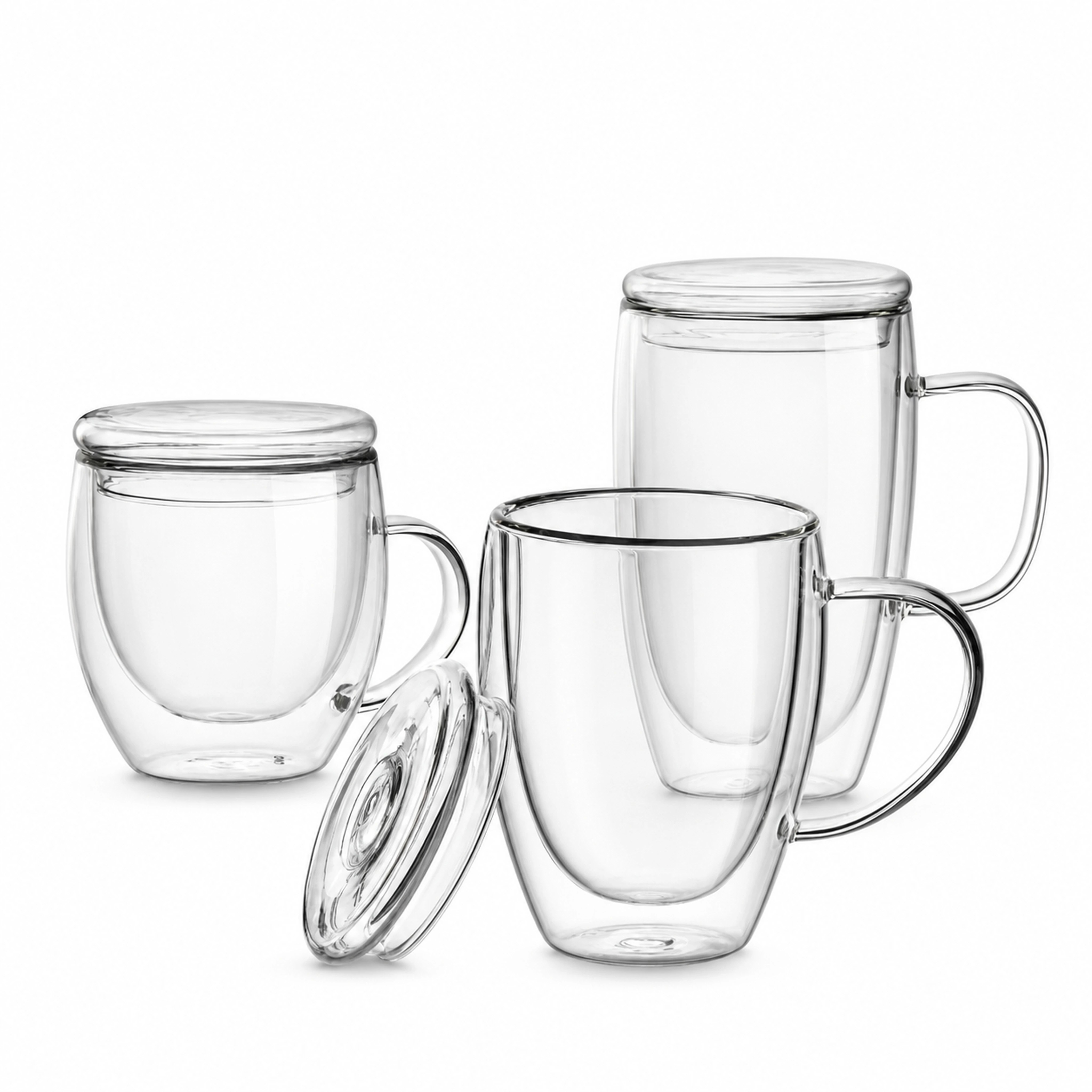
Real product image of the current DBS0031 model family. Buyers should approve the actual capacity and proportions on a physical sample.
We recommend testing the sample with the intended drink quantity. Check the hand feel, drinking rim, balance and cleaning access. If a lid is needed, fit should be checked on the exact selected capacity rather than assumed across the full range.
Our QC focus differs from a single-wall cup
For DBS0031, our supply-side review focuses on the inner and outer wall, sealed base, capacity, visual balance and box protection. We also inspect the rim and mouth finish, general consistency, logo position and set count.
The base seal is a visible production checkpoint. The inner wall should sit consistently within the outer body according to the approved reference. Obvious distortion, contamination between walls or an unacceptable seal area must be identified before packing.
Inspection criteria should be agreed with the sample. Handmade or formed glass can have controlled variation; the goal is not to describe every visual difference as a defect. The goal is to document which variation is acceptable and which condition affects function, appearance or saleability.
See how we organize glassware quality control.
Logo placement needs a stable viewing area
The double-wall structure already creates a strong visual feature. A logo should support it rather than compete with it.
We ask for vector artwork, color, size and preferred viewing side. Then we review the curved body and choose an area where the decoration can be applied and seen consistently. A logo near a sharp curve or too close to the handle may look distorted.
For a three-capacity range, we do not simply copy one logo measurement onto every cup. We compare the visual scale across 250ml, 350ml and 450ml. The buyer can approve one coordinated family while the production files still record the exact position for each SKU.
If the box carries additional branding, the glass decoration and box artwork are separate approval items.
MOQ depends on capacity and SKU split
The current DBS0031 planning baseline starts from 2,000 pieces, but the final order plan depends on how that quantity is divided.
Two thousand pieces of one capacity with one logo and one box are different from a total split among three capacities, two logos and pair gift sets. Each capacity needs a quantity, and each packaging version creates another finished SKU. A custom lid or accessory may introduce a separate minimum.
For a first launch, we often advise the buyer to choose the most important one or two capacities. That makes sample approval, inventory and repeat ordering easier. After sales data becomes available, the range can expand with a clearer quantity plan.
Packaging must prevent pressure and glass-to-glass movement
A double-wall cup may feel light, but it still needs controlled support. The box should not put concentrated pressure on the rim or body. A two-piece set needs separation so the cups do not touch. Any lid or spoon should stay in its own position.
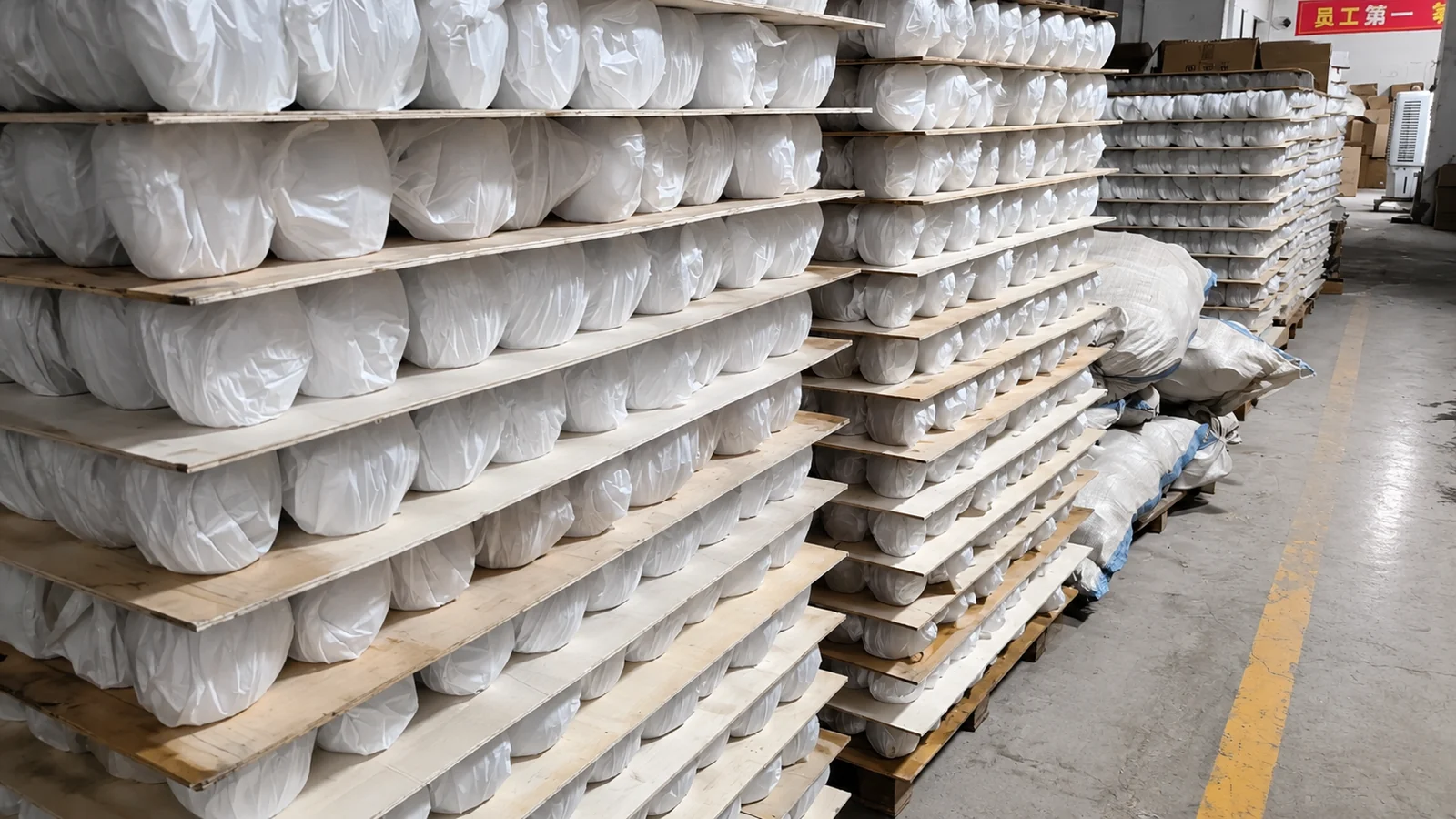
Real Guangyi Glass supply-side staging. The image illustrates protected handling and is not presented as a named buyer’s double-wall order.
We confirm the final cup dimensions before choosing the insert. The review includes retail or gift box, internal support, accessory count, labels, export-carton quantity, carton strength and destination. For e-commerce, the shelf-ready box may need additional parcel protection.
Packaging affects cost and freight volume. A buyer comparing quotes should confirm whether the price includes bulk dividers, an individual color box or a complete gift set.
Review our retail, gift and export packaging options.
The sample should prove more than appearance
For a current model, a plain sample can confirm capacity, proportion, rim and hand feel. A decorated sample confirms logo scale and position. A packaging sample confirms the cup, insert and accessories as one sellable item.
We ask buyers to write down what has been approved: exact capacity, logo file, decoration position, lid if used, piece count and pack structure. If the project includes several capacities, each version should be identified clearly.
The 7–15 day sample range is a planning baseline for current catalog projects after details are confirmed. A new shape, new lid, complex decoration or special gift box can extend the schedule. We confirm the sample scope before promising a date.
What to include in a double-wall cup RFQ
Send:
- Closest model, SKU, drawing or reference image
- Intended drink and target capacity
- Quantity per capacity
- Required logo file, color, size and position
- Lid, spoon, coaster or other accessories
- Single, pair, set, retail, gift or e-commerce packing
- Destination country or warehouse
- Target launch or delivery date
- Any performance claim that must be supported
This information lets us compare the project with DBS0031, identify open risks and quote one defined finished item.
Buyer FAQ
What is the MOQ for double-wall glass cups?
The current planning baseline for DBS0031 starts from 2,000 pieces. Final MOQ depends on capacity split, logo versions, accessories and packaging SKUs.
Which DBS0031 capacities are available?
The current product record lists 250ml, 350ml and 450ml. We recommend selecting by the intended drink, portion, product price and pack size rather than choosing every capacity automatically.
Does double-wall glass keep drinks hot for a fixed time?
We do not make one universal time claim. The structure can reduce direct heat transfer compared with a single wall, but actual performance depends on the exact product and test conditions. Any published claim should be supported by the approved item and required evidence.
Can you add a logo to both walls?
We review decoration on the suitable accessible surface of the selected model. Send the artwork and desired appearance so we can confirm a practical position and sample route.
How long does a sample take?
For a current model with confirmed requirements, 7–15 days is a typical planning range. New development, special decoration or packaging can require more time.
Can you produce a two-cup gift set?
Yes. We need the capacities, quantity, logo, included accessories and box direction. We then review the insert, glass separation, count and export carton as one finished set.
What should buyers inspect on a double-wall sample?
Check capacity, inner and outer wall appearance, sealed base, rim, hand feel, balance, logo, accessory fit and box protection. Test it under the intended serving condition.
Choose the cup first, then build the range
Guangyi Glass works with coffee brands, tea brands, retailers, gift buyers and distributors on double-wall glass cup projects. We use a current model and a specific drink situation as the starting point.
Send the capacity, quantity per size, logo, accessories, pack and destination. We will compare the request with DBS0031, explain what the sample must prove and prepare a clear route for MOQ, QC and packaging.
Request a double-wall glass cup sample or quote or browse our current glass cup collection.