
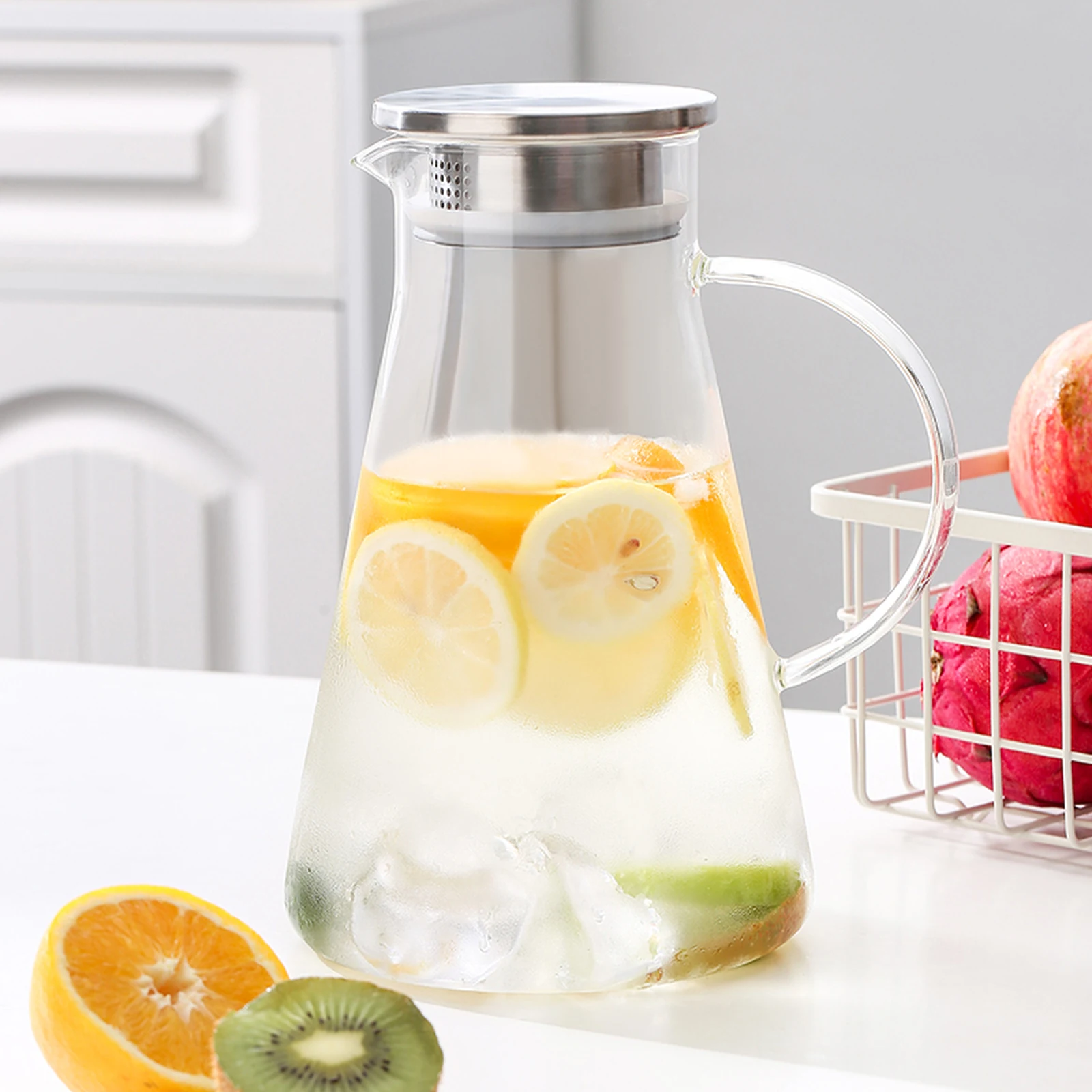
When a buyer asks us for a glass pitcher, capacity is often the first detail they provide: 1.0 liter, 1.5 liters or 1.8 liters. Capacity is important, but it does not define the finished product.
We still need to know whether the pitcher is for a retail shelf, a refrigerator door, restaurant table service, cold brew, tea, a gift set or an online store. The same body can use a stainless lid, filter, wooden lid or another accessory direction. It may be packed alone or with cups. It may travel in a master carton or continue through parcel delivery after import.
As a glass pitcher supplier, our job is to connect those buying decisions before we quote. A clear specification helps us recommend the right existing model, build a useful sample and protect the large glass body during export.
We start with the serving situation, not only the volume
A large homeware pitcher and a hospitality water jug may share a similar capacity but face different daily use.
A retail buyer may need a product that is easy to explain on the box, looks balanced on a shelf and fits a standard carton plan. A restaurant buyer may care more about handle comfort when the pitcher is full, pouring control and replacement availability. A refrigerator pitcher needs a body and lid that fit the intended storage space. A cold-brew project may add a filter whose dimensions, cleaning and separation inside the box require their own review.
We ask what liquid the buyer intends to serve, whether it will be used hot or cold, and what use claims the buyer expects. We do not infer thermal, dishwasher, microwave or stovetop claims from a transparent appearance. The approved material, accessories and required test information must support any final claim.
The destination also matters. Retail labeling, packaging expectations and freight handling can differ between the United States, Europe and the Middle East. We ask for the market early so the sample and quotation describe the same finished item.
SH1022 gives us a real 1.8-liter starting point
Our SH1022 model is a current 1800ml cold-water pitcher made with borosilicate glass and 304 stainless steel. The existing project directions include a logo, lid and filter option. Recorded packaging directions include a custom color box and export carton. Its current planning baseline starts from 2,000 pieces, with a typical sample lead time of 7–15 days after the specification is clear.
Review the SH1022 1800ml borosilicate glass pitcher.
We use this model to make the discussion concrete. The buyer can evaluate whether 1800ml fits the target market, whether the handle feels comfortable, whether the lid and filter match the intended beverage, and whether the body fits the planned shelf or refrigerator space.
These facts apply to the recorded SH1022 starting model. They are not a universal promise for every 1.8-liter pitcher design. A new lid, coating, accessory, box or body shape may change MOQ, sample scope and schedule.
A large pitcher must be reviewed when full
An empty pitcher can look light and balanced in a photograph. The buying decision changes when it holds 1.8 liters of water.
We pay attention to handle clearance, grip and connection areas, overall balance, spout flow and lid security. The buyer should also consider who will use it. A home customer carrying the pitcher from a refrigerator has a different handling pattern from a server repeatedly pouring at a table.
During sample review, we recommend checking the pitcher with the intended liquid volume. Observe whether it feels controlled when lifted, whether the lid stays in the expected position, whether the spout pours cleanly and whether the handle remains comfortable. A product that looks correct on a white background can still be wrong for the service situation.
The final instruction and testing plan should match the intended use. When metal, wood, silicone or another accessory is added, we evaluate it separately from the glass body rather than making one broad claim for the whole item.
Lid and filter decisions should be confirmed before the price
The lid is not a decorative afterthought. Its material, fit, opening and filter arrangement can change the product cost and the customer experience.
For SH1022, 304 stainless steel is part of the recorded material direction. If the buyer wants a different lid appearance, filter structure or color, we first check compatibility with the current opening. An accessory that looks close in a reference photo may not fit the existing mouth dimension or may require a different insert inside the box.
We confirm which components are included in one selling unit and whether replacement pieces are needed. We also ask how the buyer wants the filter explained to customers. A retail box may need clear use and cleaning information supplied by the buyer’s team for the destination market.
By fixing the accessory list early, we avoid a common quotation problem: one supplier prices the glass body while another includes the lid and filter. A useful quote states the complete piece list.
Logo placement has to respect the curved body
A pitcher provides a large visible surface, but not every area is suitable for decoration. Curves near the shoulder and base can distort artwork. The handle and spout affect how the product is seen on a shelf and when used.
We ask for a vector logo when possible, preferred color, approximate size and viewing side. Then we review a stable area on the selected body. A decorated sample can confirm scale and position before bulk production.
When a collection includes matching cups, the logo should be reviewed across the set. The same absolute logo size may look too large on a cup or too small on a pitcher. We prefer a coordinated approval rather than copying one measurement onto every component.
MOQ depends on the complete pitcher SKU
Our current planning baseline for SH1022 starts from 2,000 pieces. The final MOQ still depends on the number of lid versions, logo versions, colors, box types and destinations.
A single 1800ml pitcher with one lid and one color box is easier to organize than the same total divided between several filters, two box languages and different carton marks. A pitcher-and-cup gift set also creates a new finished SKU. The cup quantity, replacement ratio and insert must be confirmed together.
If a buyer wants a lower-risk first order, we usually recommend one existing pitcher body, one accessory route and one packaging format. That keeps the sample focused and makes repeat ordering easier.
Read our supply-side explanation of glassware MOQ.
Packaging has to support the body, handle, spout and lid
A large pitcher creates several packing risks. The body carries more weight. The handle and spout project beyond the central shape. A loose lid or filter can move against the glass. An oversized box allows impact; an undersized insert can apply pressure in the wrong place.
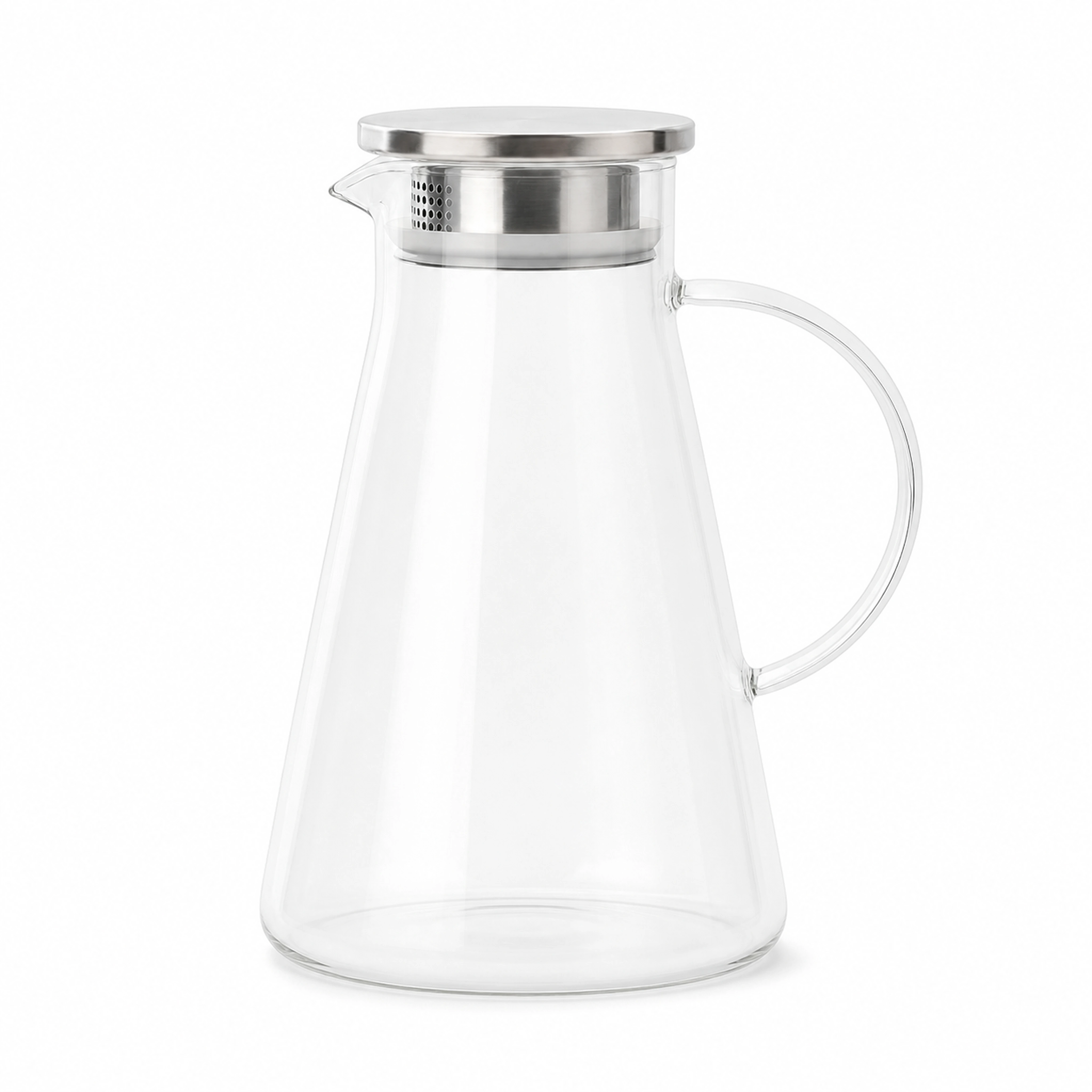
Real product image of the current SH1022 model. Final packaging must be sized around the approved product and accessories.
We define the complete set before designing or confirming the insert. The packing review includes individual protection, lid and filter separation, box fit, inner quantity, export-carton strength, carton marks and destination. For e-commerce, the retail box may need another protection layer because single-parcel handling is different from palletized export transport.
Packaging also changes freight volume. Buyers should compare the finished packed product, not only the unboxed pitcher price.
See our glassware packaging process.
What our pitcher QC focuses on
Our inspection points for glass pitchers include the pour stream and spout, handle load, lid and filter fit, relevant thermal-shock requirement and filled-weight carton protection. We also review the agreed dimensions or capacity, glass finish, logo and set count.
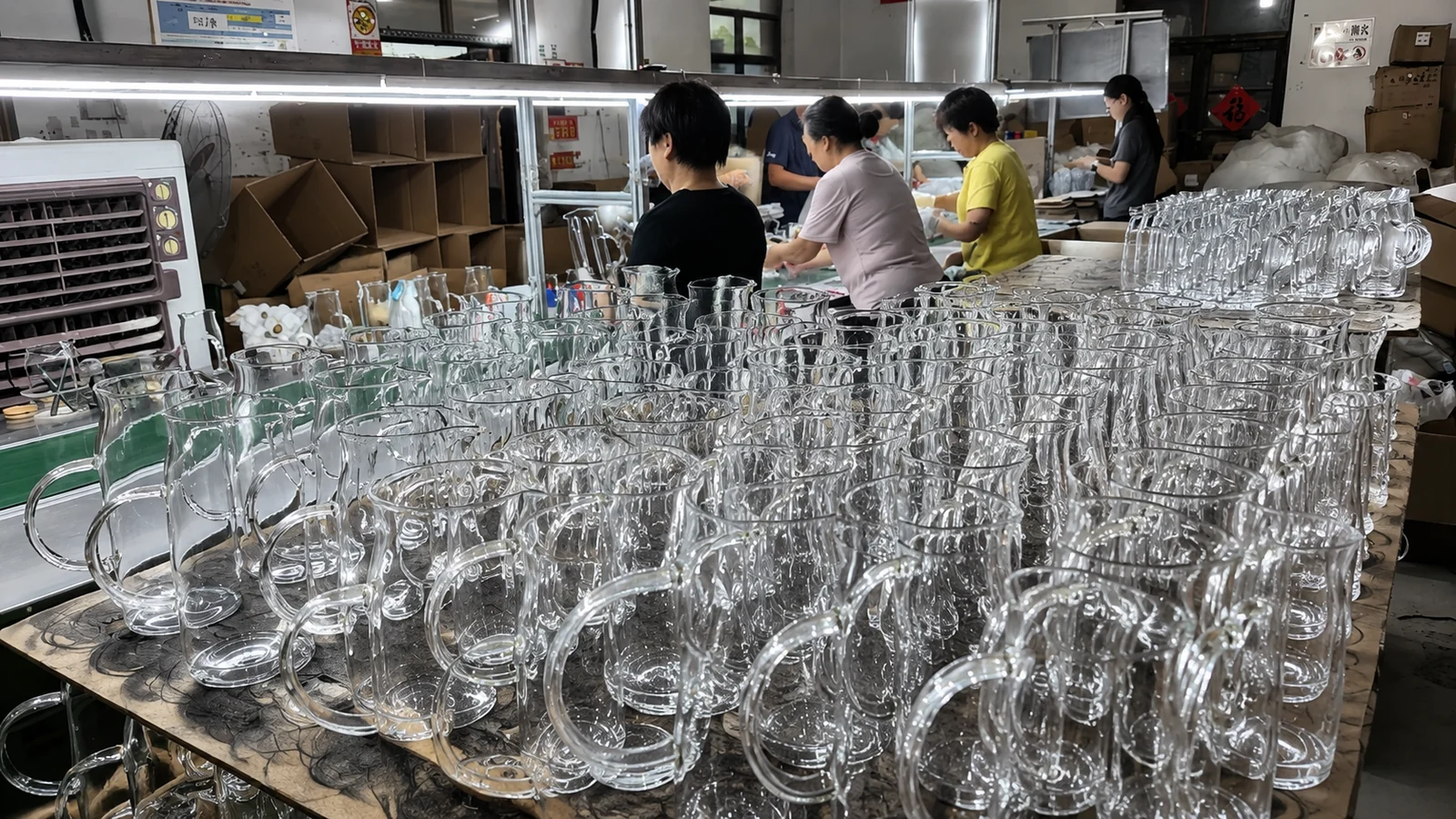
Real Guangyi Glass supply-side inspection imagery. The scene illustrates QC practice and does not identify a confidential customer project.
The approved sample and specification give the team a clear comparison standard. If a lid fit, logo position or carton structure is changed after approval, the revision should be documented. Informal changes are a common source of packing and reordering mistakes.
For a pitcher-and-cup set, we inspect the set as a selling unit. Correct glassware with a missing cup or loose filter is still an incomplete product.
Review our glassware quality-control approach.
What to include in a glass pitcher RFQ
Send the following information for a useful review:
- Closest product link, SKU, drawing or reference image
- Target capacity and intended beverage or use
- Required glass and accessory materials
- Lid, filter and other included components
- Logo file, color, size and preferred position
- Single pitcher or pitcher-and-cup set structure
- Expected quantity per capacity or version
- Retail, gift, e-commerce or bulk packing direction
- Destination country or warehouse
- Required delivery or launch date
If you do not know every answer, tell us which decisions are open. We can present a current-model route and explain what must be sampled before the final quotation.
Buyer FAQ
What is the MOQ for an OEM glass pitcher?
Our current planning baseline for SH1022 and many OEM glassware projects starts from 2,000 pieces. The final MOQ depends on capacity, lid or filter version, decoration, packaging and the quantity allocated to each finished SKU.
How long does a glass pitcher sample take?
For a current model with a clear specification, 7–15 days is a typical planning range after the product, logo, accessories and packing direction are confirmed. New tooling or a new accessory can require a different schedule.
Can you add a stainless-steel lid or filter?
SH1022 uses a recorded borosilicate-glass and 304-stainless-steel direction, with lid and filter options for review. For another model, we check the opening, fit and intended use before confirming compatibility.
Can a logo be printed on a curved pitcher?
Yes, when a suitable decoration area and process are confirmed. We review logo size, position and viewing side on the selected body, then use the approved sample as the production reference.
Can you pack a pitcher together with matching cups?
Yes. Send the pitcher SKU, cup SKU, cup count, capacities and box direction. We review every component, the insert, replacement plan and final carton as one set.
What should a buyer test on the sample?
Check capacity, handle comfort when filled, pouring, spout behavior, lid and filter fit, logo, cleaning considerations and packaging. The exact checks should match the intended use and destination requirements.
Do you provide a custom color box?
Yes. SH1022 has custom color-box and export-carton directions in its current product record. The final box size, artwork, insert and labels are confirmed around the approved pitcher and accessories.
Send us the pitcher project, not only a capacity
Guangyi Glass works with overseas buyers on glass pitchers, cups, teapots, jars and packaging. For a useful quote, we need to understand how the pitcher will be used and sold.
Send the closest model, capacity, lid or filter, quantity, logo, packing and destination. We will review whether SH1022 or another current model fits the project, what the sample must prove and which details control the final MOQ and cost.
Request a glass pitcher sample or bulk quote or compare our current glass pitcher models.