
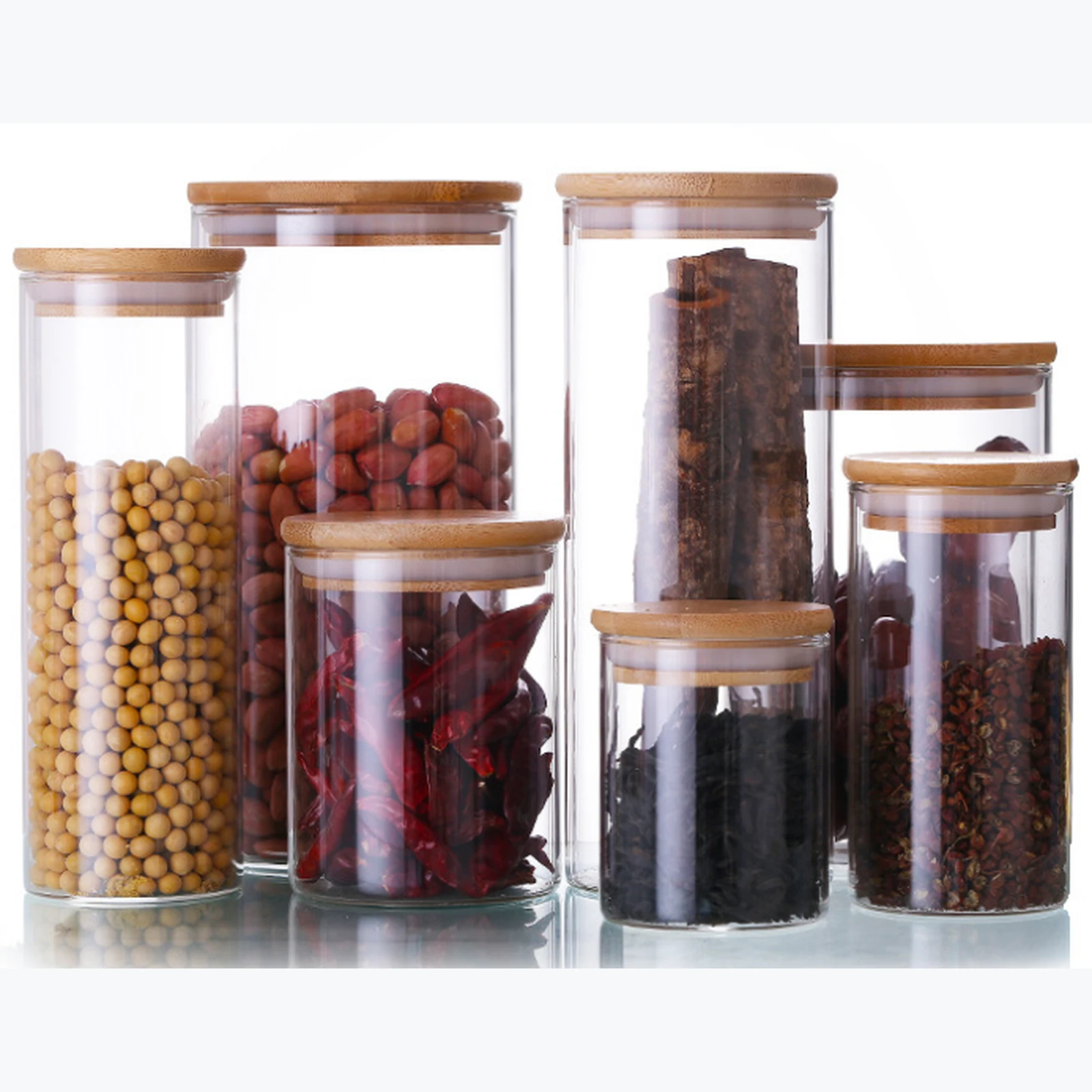
A storage jar project often looks simple until the lid, opening, fill volume, label area and carton have to work together. We have seen buyers select a jar from a photograph, then discover that the scoop does not pass through the mouth or that the chosen lid makes the finished pack too tall.
As the Guangyi Glass team, we use the same practical order: define the use, select a feasible current product or development route, approve a physical sample, record the finished specification, and only then lock bulk production and packing. This guide explains how we apply that order to a glass storage jar range for food brands, homeware retailers, distributors and e-commerce sellers.
We start with the buying decision, not a catalogue screenshot
The intended use is dry-food storage, pantry organization, gifting or retail resale. Those words still need to become an RFQ that production can follow. We ask what will be placed in or served through the product, who will handle it, where it will be sold, how many finished SKUs are needed and what the destination expects from the pack.
A buyer may send one reference image and ask for the same item. We treat that image as a discussion point, not permission to copy unknown dimensions or claims. We compare it with current products, identify the features that matter, and list the information that cannot be verified from a photograph. If a current model can meet the brief, it normally gives the buyer a clearer sampling route. If a new shape is necessary, we explain which drawing, tooling and approval steps must be added.
The first review covers:
- food-contact use and the exact product stored
- usable capacity, mouth diameter and shelf height
- glass shape, lid material, seal and accessory fit
- logo, label and retail artwork position
- single-piece, set, e-commerce and export packing
This early review prevents a low-looking unit price from becoming an expensive finished project. It also lets us separate facts already confirmed in our product records from items that still require a sample or test.
A real buyer situation usually exposes the missing information
We often receive enquiries with a target appearance, an estimated total quantity and a launch date. The missing information is usually the split: quantity per size, decoration version, accessory combination and box. One total quantity may become many small SKUs after that split. Each SKU needs its own production identity and packing count.
For a glass storage jar range, we ask the buyer to choose the first commercial priority. It may be one core size, one service area, one operating condition or one defect risk. We then build the first sample around that priority. This is more useful than sampling a broad range with different open questions because the buyer can approve a defined item and learn what actually needs changing.
The physical sample is important. Screen color, apparent thickness and proportion can change with photography. Capacity and dimensions must be measured, accessory fit must be tried, and the product should be handled under its intended use. We ask the buyer to return comments against the same checklist rather than sending a new inspiration image after every revision.
Four sourcing mistakes that create avoidable revisions
- comparing nominal volume without checking usable fill level
- approving the glass but not the lid and seal as one unit
- creating a multi-size set before confirming carton volume
- assuming a label fits every curved jar body
These mistakes are not solved by asking for a cheaper quotation. They are solved by making the specification more complete. When two suppliers appear to quote the same product, check whether both include the same decoration, accessory, inner protection, retail box, export carton and inspection scope. A quotation is comparable only when the finished deliverable is comparable.
We also recommend identifying claims that will appear on a product page or retail box. Words about temperature, food contact, washing, stacking, capacity or performance should match the approved product and the evidence required in the destination market. We do not turn an assumption from a reference photo into a factory guarantee.
MOQ follows the production route and SKU split
There is no honest universal MOQ for every glass storage jar range. A current undecorated model, a current model with one logo, several capacities with different boxes, and a newly tooled shape create different setup and purchasing conditions. Components such as lids, inserts, labels or printed cartons can also have their own practical minimums.
Our first MOQ conversation therefore uses a quantity table: model or size, decoration, accessory, pack and quantity for each finished SKU. We review whether a trial route is possible with current products and simple packing. If the requested quantity cannot support a fully custom route, we prefer to explain the constraint and offer a narrower first order instead of promising a minimum that production cannot hold.
MOQ also affects quality control. A first order with fewer, clearer SKUs is easier to sample, inspect and replenish. Buyers can add variants after the core item has sales or operating feedback. This is often a better use of budget than dividing the first order across too many colors or capacities.
Read how we explain glassware MOQ.
The sample must answer written questions
Before arranging a sample, we prepare a short approval list. It records the model or drawing, intended use, dimensions or capacity, material route, visible finish, decoration, accessories and pack direction. The sample is then evidence for those points.
A current plain sample can confirm basic form, hand feel and fit. A decorated sample can confirm artwork size, color reference, orientation and the effect of the curved glass surface. A packing sample can confirm the product, insert, box and labels as one sellable or operable unit. These may be separate steps; calling all of them simply “the sample” hides what has actually been approved.
Sample timing starts after the scope is clear. Existing products with simple requirements normally have fewer steps than new tooling, special color, complex decoration or a custom box. We confirm the route before giving a project-specific schedule. If the buyer has a fixed launch, we work backward from the required delivery point and show which approvals control the critical path.
Bulk production follows the approved reference
After approval, we freeze the documents that production and QC will use. These can include the signed sample, drawing, artwork file, color reference, component list, packing specification, carton marks and agreed inspection points. A later change is not treated as a small message; we review its effect on material, setup, sample status, quantity and schedule.
Bulk work has checkpoints rather than one final look. Incoming components must match the approved type. Forming and finishing are monitored for the characteristics relevant to the product. Decoration is checked against position and appearance. Accessories are matched to the correct SKU. Packing lines need a clear count and protection method.
We use real product and factory imagery. This image does not claim to show a named buyer order.
Our QC plan separates function, appearance and packing
Quality language must be specific enough for two people to reach the same conclusion. We divide checkpoints into safety or function, dimensions and fit, visible appearance, decoration, accessories, and packaging. The exact list changes with the approved item.
Critical points are those that can make the product unsafe or unusable. Major points affect function, saleability or the agreed appearance. Minor points are controlled variations that do not change normal use but still need an agreed limit. We avoid describing every natural glass variation as automatically acceptable or automatically defective. The approved sample and written criteria provide the reference.
Inspection should also verify count, SKU identification, carton marks and packing orientation. A correct glass in the wrong box is still a shipment problem. When an issue appears, we record where it was found, isolate the affected material, check whether the cause is repeated, and decide whether sorting, rework or replacement is appropriate. Reworked goods require another defined check before release.
See our supply-side QC process.
Packaging is part of the product specification
Glass must be protected from glass-to-glass contact, concentrated pressure and uncontrolled movement. The pack design begins after the approved product dimensions and accessories are known. A small change to a rim, handle, lid or set count can change the insert and carton.
We ask whether the inner pack is for factory handling, wholesale distribution, store display, gifting or parcel delivery. Those are different jobs. A color box can present the product but may still need an outer parcel solution for e-commerce. An operating carton for hospitality may prioritize count, identification and replacement handling rather than shelf graphics.
Carton quantity and dimensions influence freight and warehouse planning. Buyers should compare quotes with the same pack basis and ask for the expected finished carton information before confirming transport. We do not claim that one generic carton is correct for every glass shape or destination.
Review our glassware packaging options.
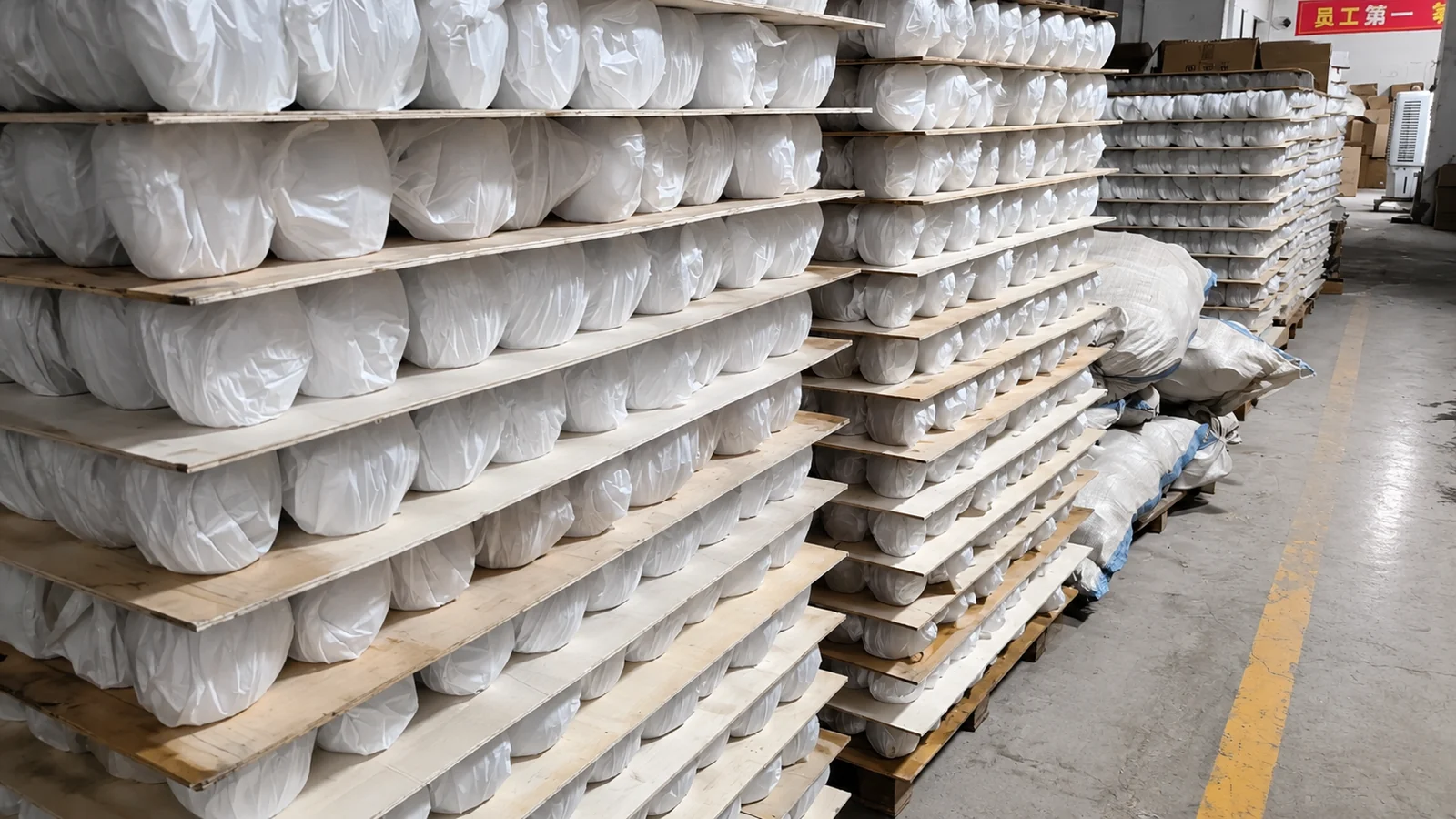
Packing is reviewed against the approved product, accessory set, sales channel and destination.
Lead time is a sequence, not one number
We break a project into specification review, sample preparation, buyer approval, material and component readiness, bulk production, decoration, inspection, packing and shipment handover. A current item with confirmed artwork follows a different path from new development with custom components.
The buyer controls some milestones. Slow artwork approval, a revised pack or an unconfirmed quantity split can pause the sequence. Our team controls production planning and should report changes early. Transport time is then quoted separately according to destination, Incoterm and chosen route. This makes the timeline easier to manage than one date that mixes factory work with freight assumptions.
Before shipment, the commercial documents, carton information and release result should match the order. If the buyer uses an external inspection company or has a nominated forwarder, those contacts and booking requirements should be included before the goods are ready.
What to send in an RFQ
Send the closest product link, drawing or reference image; intended use; capacity or dimensions; quantity per SKU; material or performance needs; logo artwork; accessory list; pack type; destination; Incoterm if known; sample requirement; and target delivery window.
For the glass storage jar range, add the operating detail that matters most. Tell us what the sample must prove and which condition would make the product unacceptable. That information lets us answer feasibility first, then give an MOQ, sample route, production plan and quotation based on the same finished item.
Use our practical glassware RFQ guide or send the project to our team.
Buyer FAQ
Can Guangyi Glass make a custom glass storage jar range?
We can review current-product customization and new-development routes. Feasibility depends on the shape, use, material, decoration, accessories, quantity and pack. Send a drawing or reference plus the intended use so we can identify the suitable route before quoting.
What is the MOQ?
MOQ depends on the production route and quantity per finished SKU. A current model with simple decoration is different from several sizes, custom components or new tooling. We confirm MOQ after the SKU split and pack are defined.
How long does a sample take?
We confirm sample timing after the sample type is clear. A plain current product, a decorated approval sample, a newly developed shape and a complete packing sample have different steps. We give the project schedule after reviewing those steps.
What should buyers approve on the sample?
Approve the exact product identity, dimensions or capacity, intended use, visible appearance, decoration, accessory fit and pack direction. Record any critical function or defect limit that QC must use during bulk production.
Can you provide custom packaging?
Yes, after we know the approved product dimensions, accessories, sales channel and required count. Retail presentation, gift sets, operating cartons, e-commerce handling and export protection need different pack reviews.
How do you control defects before shipment?
We use the approved sample and written criteria, check relevant points during production, isolate nonconforming material and define sorting or rework where appropriate. Reworked goods are checked again before release.
What makes two quotations different?
Compare the same model, material, dimensions, decoration, accessories, quantity per SKU, inner pack, export carton and inspection scope. A lower figure may exclude work that the other quotation includes.
Build the first order around one clear decision
Our role is to turn the buyer’s commercial idea into a specification that production, QC, packing and shipping can all follow. For food brands, homeware retailers, distributors and e-commerce sellers, that means fewer assumptions, a sample with written approval points and a quotation tied to the finished product.
Browse the relevant product range, review the related capability, or send your RFQ to Guangyi Glass. We will confirm what can be done, what still needs a sample, and what information is required before bulk production.